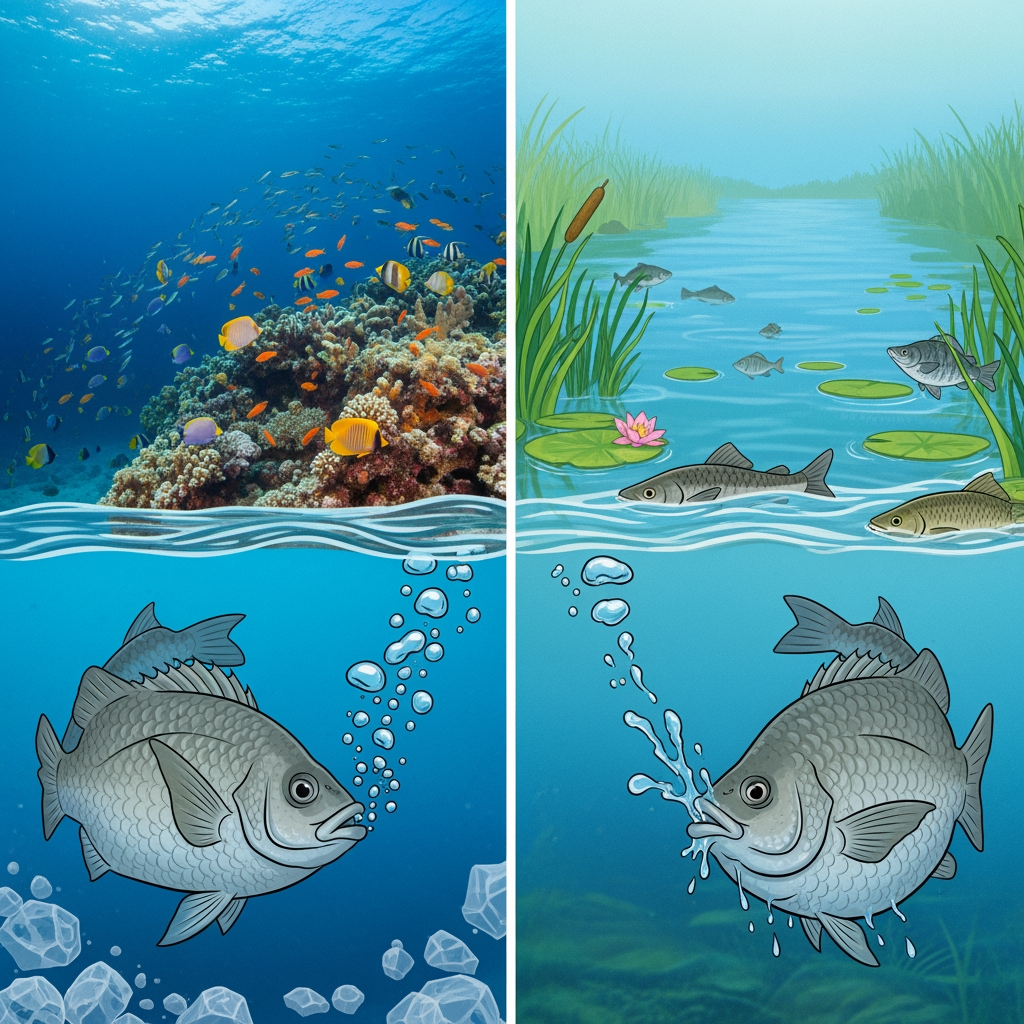
Fish live surrounded by water, but do they need to drink it? The answer depends entirely on whether we're talking about freshwater or saltwater fish—and the reasons are fascinating.
Freshwater Fish Don't Drink
Freshwater fish have body fluids saltier than their environment. Water naturally flows into them through their gills and skin via osmosis. They actually have the opposite problem—they must constantly expel excess water through frequent, dilute urination.
Saltwater Fish Drink Constantly
Ocean fish face reversed circumstances. Seawater is saltier than their body fluids, so water constantly leaves their bodies through osmosis. To survive, marine fish drink seawater continuously and have specialized cells in their gills that excrete excess salt.
The Osmosis Principle
Water moves from areas of low salt concentration to high salt concentration through semipermeable membranes. This passive process requires fish to actively manage their internal salt and water balance. It's a constant struggle against physics.
Energy Costs
Maintaining this balance requires significant energy. Fish devote substantial metabolic resources to osmoregulation. This is one reason why most fish species can't survive in both fresh and salt water—the switch would overwhelm their regulatory systems.
Remarkable Exceptions
Salmon famously migrate between fresh and salt water. They accomplish this through dramatic physiological changes triggered by hormones. Their kidneys and gills essentially reverse function during the transition.
This article was generated by AI to provide informational content.