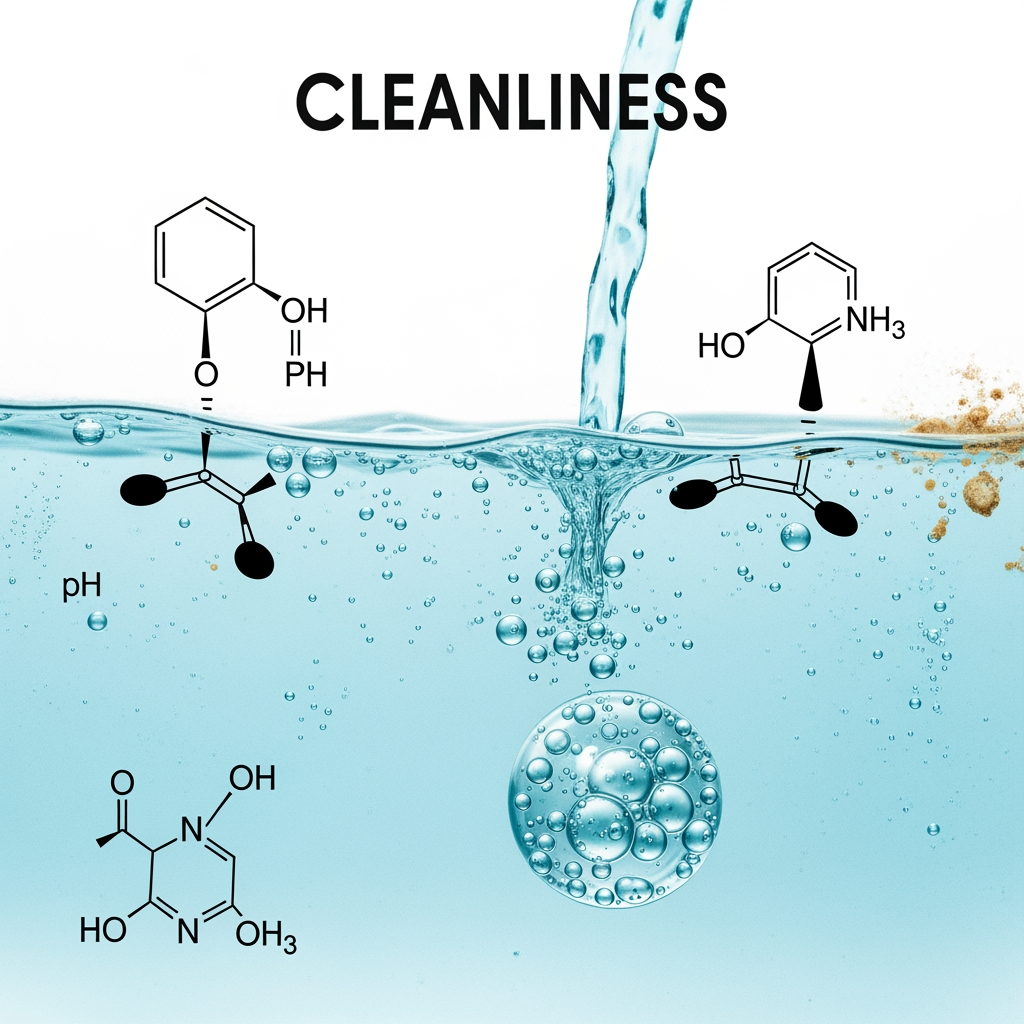
Soap has been used for thousands of years, yet most people don't know how it works. The answer involves interesting chemistry that allows soap molecules to grab dirt and wash it away.
The Soap Molecule
Soap molecules have split personalities. One end is hydrophilic—it loves water. The other end is hydrophobic—it repels water but attracts fats and oils. This dual nature is the key to soap's cleaning power.
Surrounding the Dirt
When soap meets greasy dirt, the hydrophobic ends burrow into the grease while the hydrophilic ends face outward toward water. Many soap molecules surround each tiny oil droplet, forming structures called micelles.
Lifting and Suspending
These micelles essentially wrap the dirt in a water-friendly coating. The greasy core becomes surrounded by outward-facing water-loving ends. Now the dirt can be suspended in water and washed away.
Why Scrubbing Helps
Mechanical action breaks dirt into smaller pieces, giving soap molecules more surface area to work with. Warm water helps too, making fats more liquid and soap molecules more active.
Soap vs. Detergent
Traditional soap is made from fats and lye. Synthetic detergents achieve similar results using petroleum-derived molecules. Detergents work better in hard water, which is why they've largely replaced soap in laundry and dishes.
Antibacterial Claims
Regular soap removes bacteria effectively through the same lifting process. Studies show plain soap works as well as antibacterial varieties for most purposes, without concerns about antibiotic resistance.
This article was generated by AI to provide informational content.