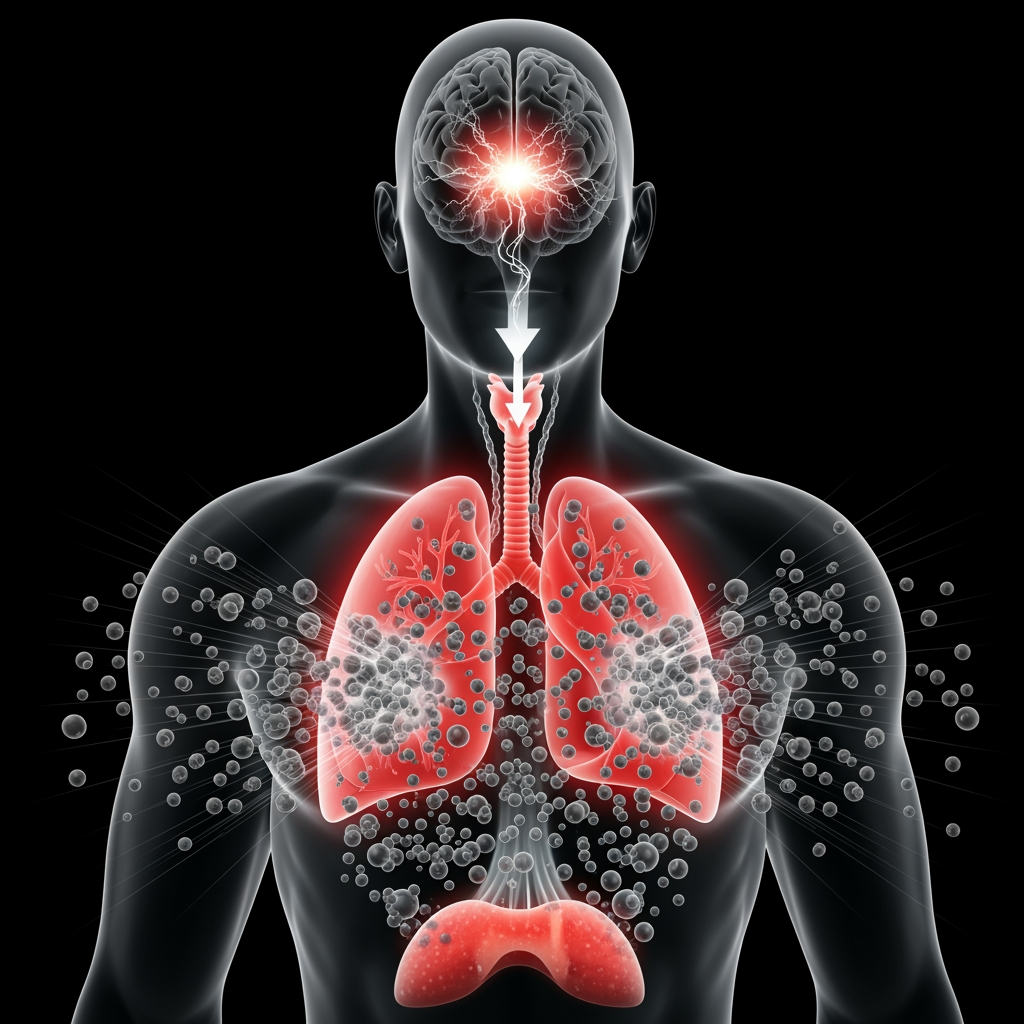
The urge to breathe becomes overwhelming after just a minute or two. Your body has powerful mechanisms to prevent you from suffocating yourself. What's actually happening during breath-holding?
Not Oxygen Depletion
Surprisingly, the urge to breathe isn't triggered by low oxygen. Your blood remains well-oxygenated long after the discomfort becomes unbearable. The real trigger is carbon dioxide buildup.
CO2 Accumulation
As cells use oxygen, they produce carbon dioxide. Without breathing, CO2 accumulates in your blood, forming carbonic acid. Sensors in your brain detect rising acidity and trigger intense breathing urges.
The Struggle
After about 30 seconds, the urge to breathe becomes noticeable. By 60 seconds, it's quite uncomfortable. Diaphragm spasms begin—involuntary contractions trying to force breathing. Anxiety amplifies the discomfort.
Trained Divers
Free divers can hold their breath for over 20 minutes through training and preparation. They hyperventilate beforehand to lower CO2 levels and learn to tolerate the discomfort. Their bodies adapt to more efficiently use oxygen.
The Blackout Risk
Hyperventilating before breath-holding is dangerous. By artificially lowering CO2, you delay the breathing urge. Oxygen can then drop to dangerous levels before you feel the need to breathe, causing unconsciousness without warning.
Protective Reflexes
Eventually, you will breathe—involuntary reflexes override conscious control. Permanent damage from voluntary breath-holding is extremely unlikely because protective mechanisms kick in before critical injury.
This article was generated by AI to provide informational content.