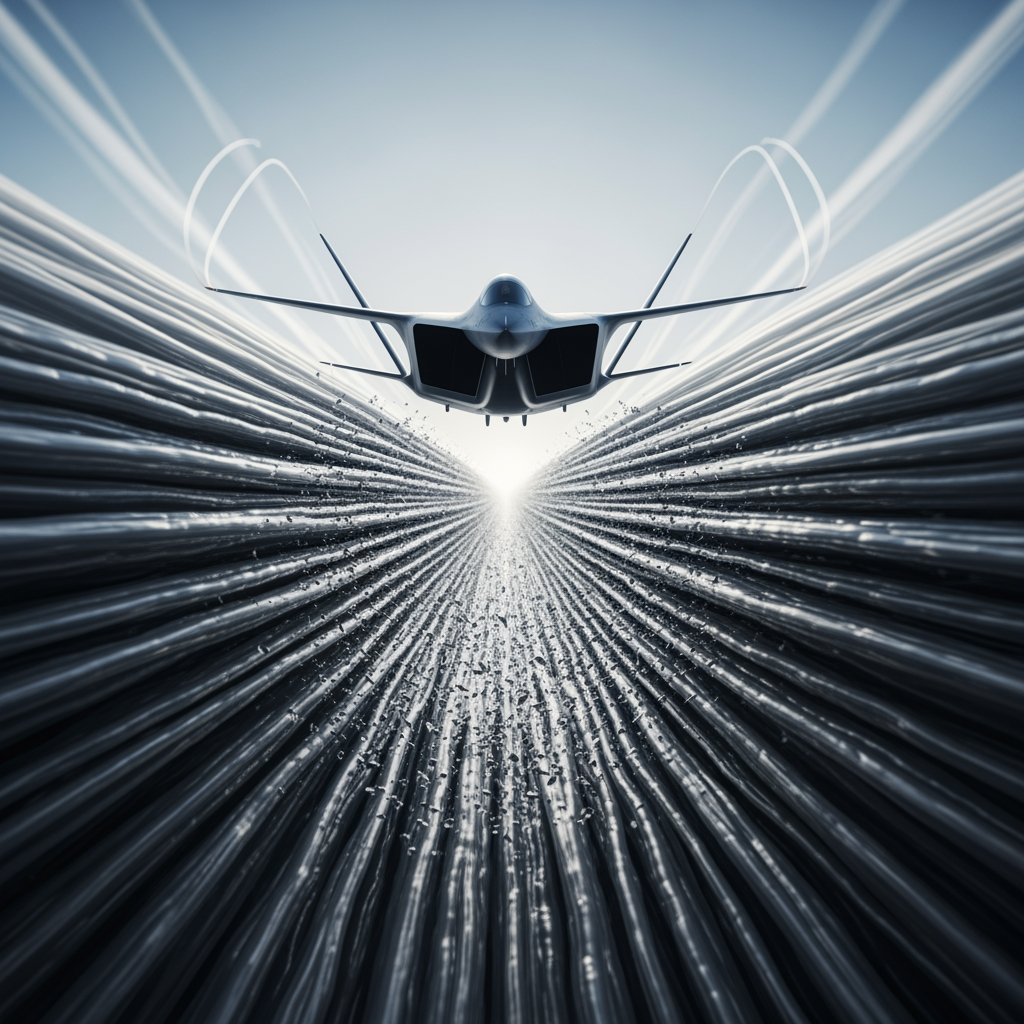
Jets breaking the sound barrier create dramatic sonic booms and visible shock cones. But what exactly is the sound barrier, and why was it once considered unbreakable?
Sound Travels at a Speed
Sound moves through air at about 767 mph at sea level (varying with temperature and altitude). This is Mach 1—the reference point for measuring supersonic speeds. Mach 2 is twice the speed of sound.
The Compression Problem
As aircraft approach Mach 1, they catch up with their own sound waves. These compressed waves create a wall of pressure that increases drag dramatically. Early aircraft couldn't generate enough thrust to push through.
The Breakthrough
In 1947, Chuck Yeager flew the Bell X-1 past Mach 1, proving the barrier could be broken. The key was understanding that while drag spikes near Mach 1, it actually decreases at higher supersonic speeds.
The Sonic Boom
Supersonic aircraft continuously generate shock waves that trail behind them in a cone shape. When this cone passes over the ground, observers hear a boom. The aircraft doesn't create one boom at Mach 1—it continuously creates the boom while supersonic.
Why Most Planes Don't Go Supersonic
Supersonic flight requires enormous fuel consumption and creates disruptive sonic booms. The Concorde flew supersonically but proved uneconomical. Current research focuses on reducing sonic booms to make supersonic commercial travel viable again.
This article was generated by AI to provide informational content.