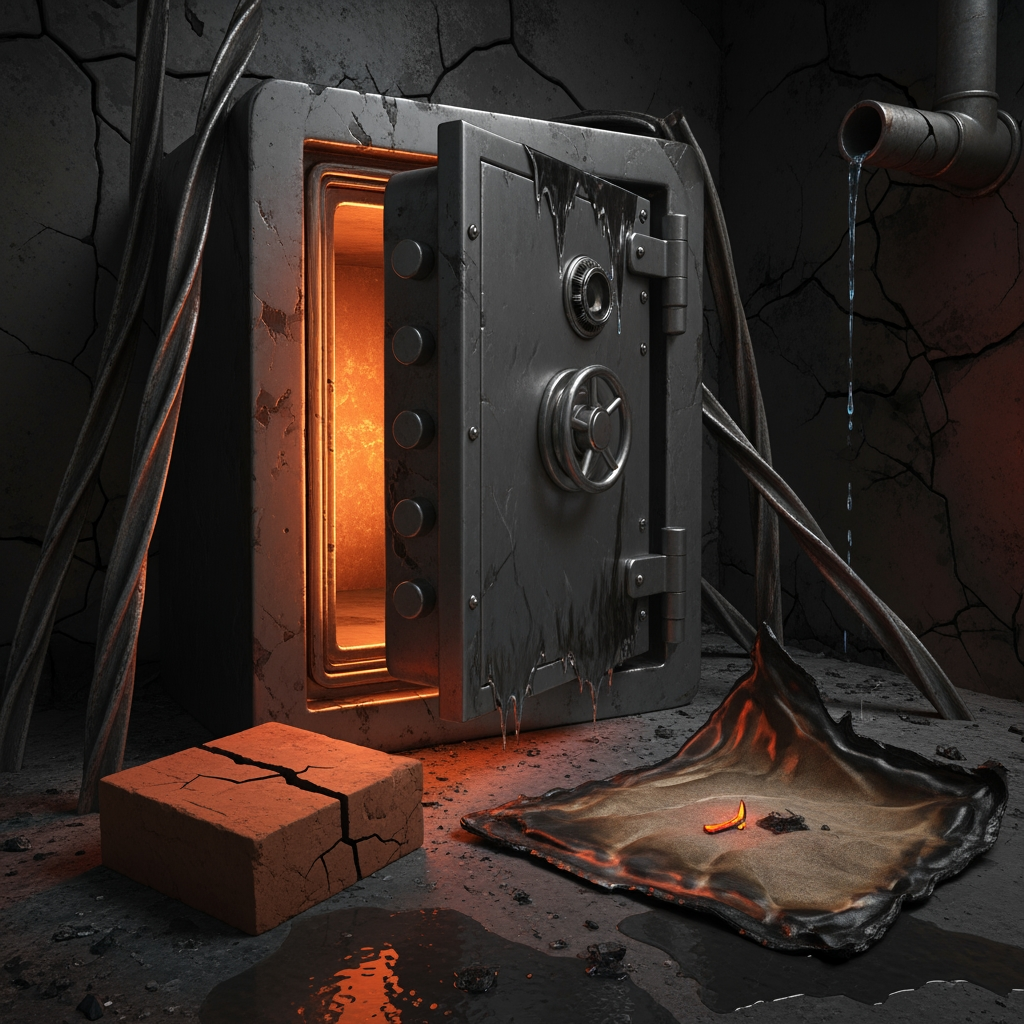
Buildings, safes, and fabrics are marketed as "fireproof." But nothing is truly immune to fire. What does fireproof actually mean, and how do these materials resist flames?
Fire-Resistant vs. Fireproof
"Fireproof" is marketing language. Nothing withstands unlimited heat indefinitely. Fire-resistant materials delay ignition, slow flame spread, or survive heat for rated periods—one hour, two hours, four hours. Eventually, everything burns or melts.
How Materials Resist Fire
Different strategies provide fire resistance. Some materials require extreme temperatures to ignite. Others release moisture when heated, absorbing energy. Some char on the surface, insulating inner layers. Others simply don't combust at all.
Fire-Resistant Fabrics
Treated fabrics contain chemicals that interfere with combustion. Some release gases that displace oxygen. Others form protective char layers. Inherently fire-resistant fabrics like aramids (Kevlar, Nomex) have molecular structures that resist breaking down at high temperatures.
Fireproof Safes
Safes rated for fire protection contain insulating materials—often gypsum—that release water vapor when heated. This endothermic reaction absorbs energy, keeping interior temperatures below the point where paper ignites (about 450°F).
Building Materials
Concrete and brick resist fire well because they don't combust and conduct heat slowly. Steel loses strength at high temperatures, which is why fireproof coatings are applied. Wood chars predictably, which paradoxically can provide fire resistance by insulating inner layers.
This article was generated by AI to provide informational content.