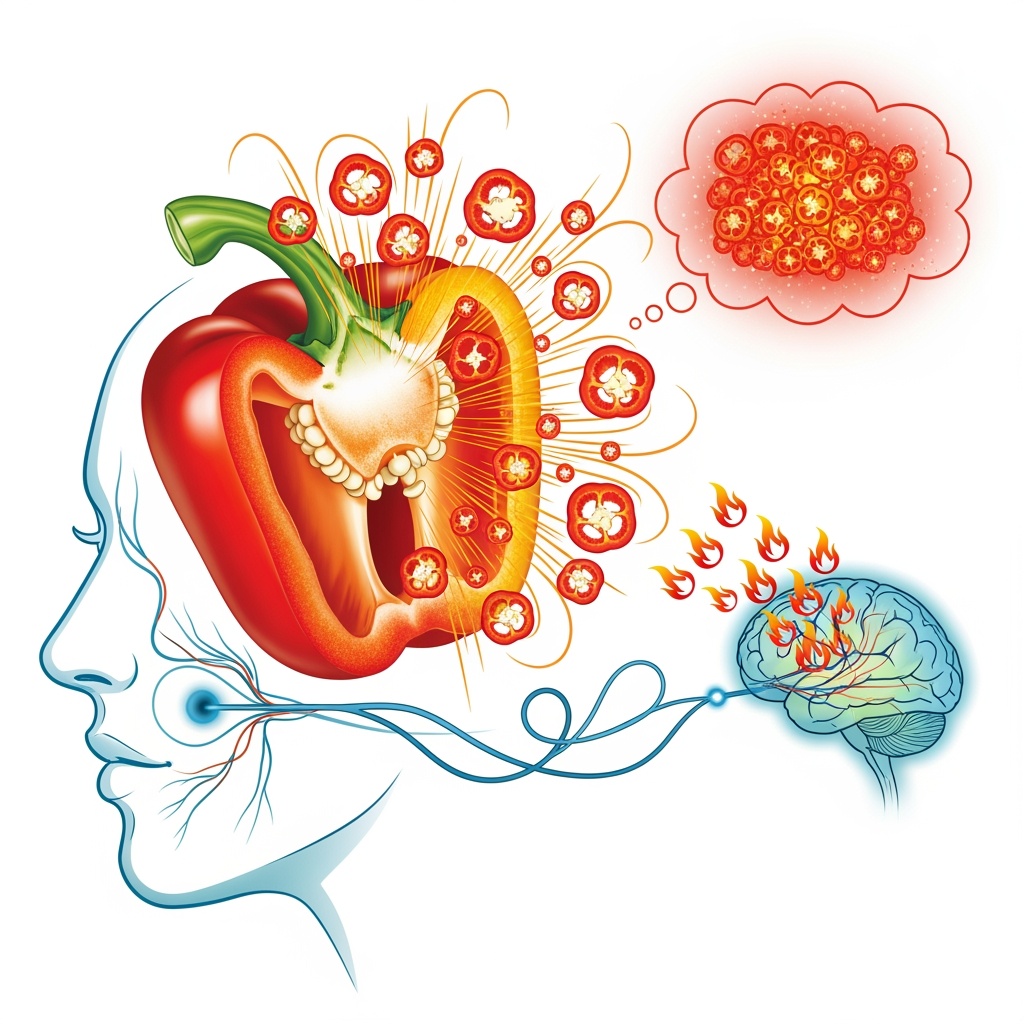
Chili peppers make your mouth burn even though their temperature is the same as mild food. The sensation of heat from spicy food is an illusion—but a very convincing one.
The Molecule Responsible
Capsaicin, the compound that makes peppers spicy, binds to TRPV1 receptors in your mouth. These same receptors normally detect dangerous heat. Capsaicin tricks them into sending heat signals even though no actual heat is present.
Why It Feels Like Burning
Your brain receives signals identical to those caused by dangerously hot temperatures. It can't distinguish capsaicin activation from real heat. The pain, sweating, and flushing you experience are genuine responses to perceived thermal danger.
Different Peppers, Same Mechanism
All pepper heat comes from capsaicin and related compounds. Different pepper varieties have different concentrations. The Scoville scale measures capsaicin content, from mild bell peppers (zero) to Carolina Reapers (over 2 million Scoville units).
Why Some People Love It
Spicy food triggers endorphin release—natural painkillers that create a mild high. Thrill-seeking personalities may enjoy this sensation. Regular exposure also reduces sensitivity, allowing spice lovers to eat increasingly hot foods.
Water Doesn't Help
Capsaicin doesn't dissolve in water—that's why drinking water provides only momentary relief. Milk, yogurt, and other dairy products contain casein that binds capsaicin and washes it away more effectively.
This article was generated by AI to provide informational content.