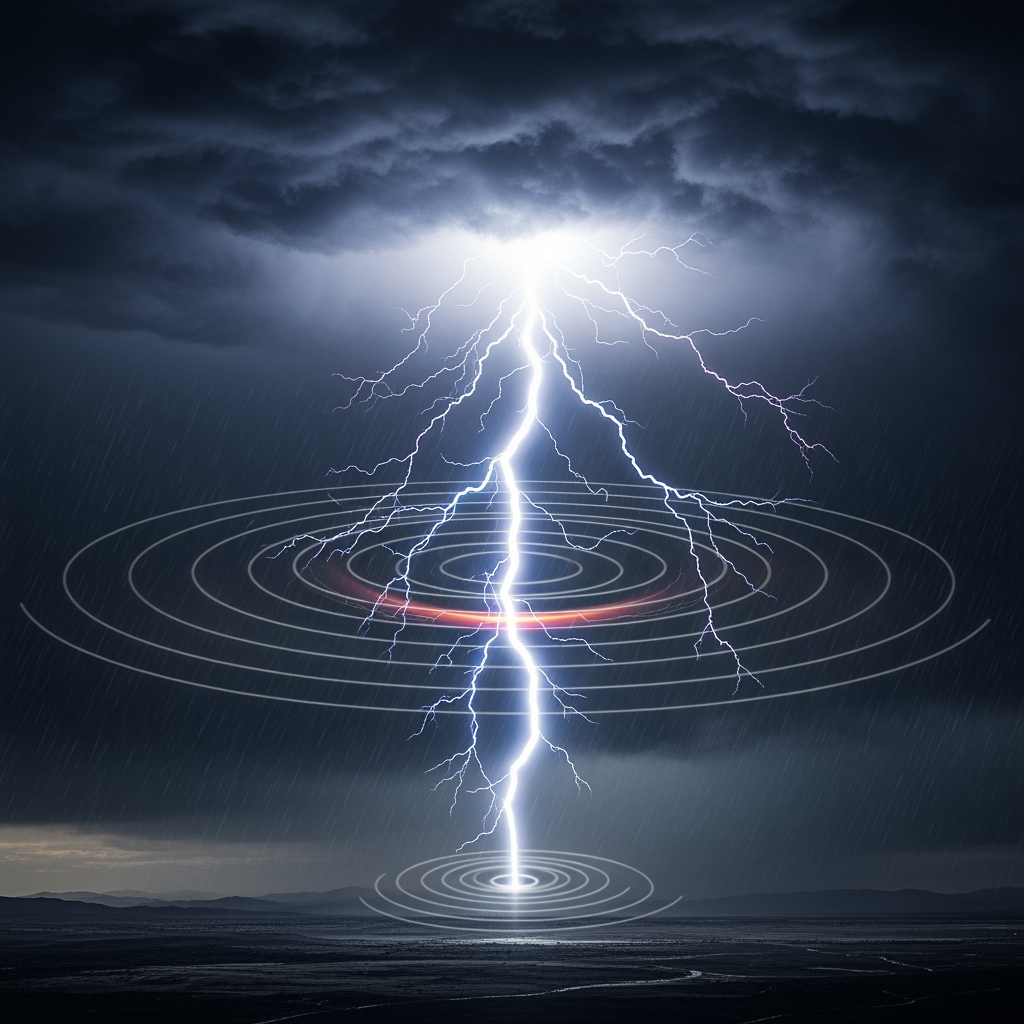
Lightning flashes, and moments later a deafening boom shakes your house. Thunder can reach 120 decibels—as loud as a rock concert. But what creates that incredible sound?
Superheated Air
Lightning heats the air in its path to around 30,000 Kelvin—five times hotter than the sun's surface. This extreme heat happens almost instantaneously, causing the air to expand rapidly at supersonic speeds.
The Explosive Expansion
The rapid expansion creates a shockwave that travels outward from the lightning channel. This shockwave is what we hear as thunder. The initial crack is the sharp sound of the shockwave, while the rumble comes from sound bouncing off terrain and the extended length of the lightning bolt.
Why Thunder Rumbles
Lightning bolts can stretch for miles. Sound from different parts of the bolt reaches your ears at different times since sound travels relatively slowly. The distant parts take longer to arrive, creating the extended rumble effect.
Counting Seconds
Light travels almost instantly, but sound moves at about one mile every five seconds. Counting seconds between flash and thunder, then dividing by five, gives you rough distance to the strike in miles.
Sheet Lightning Mystery
Sometimes you see bright flashes without thunder. This "heat lightning" is simply distant storms where thunder dissipates before reaching you. Thunder typically can't be heard beyond 10-15 miles.
This article was generated by AI to provide informational content.