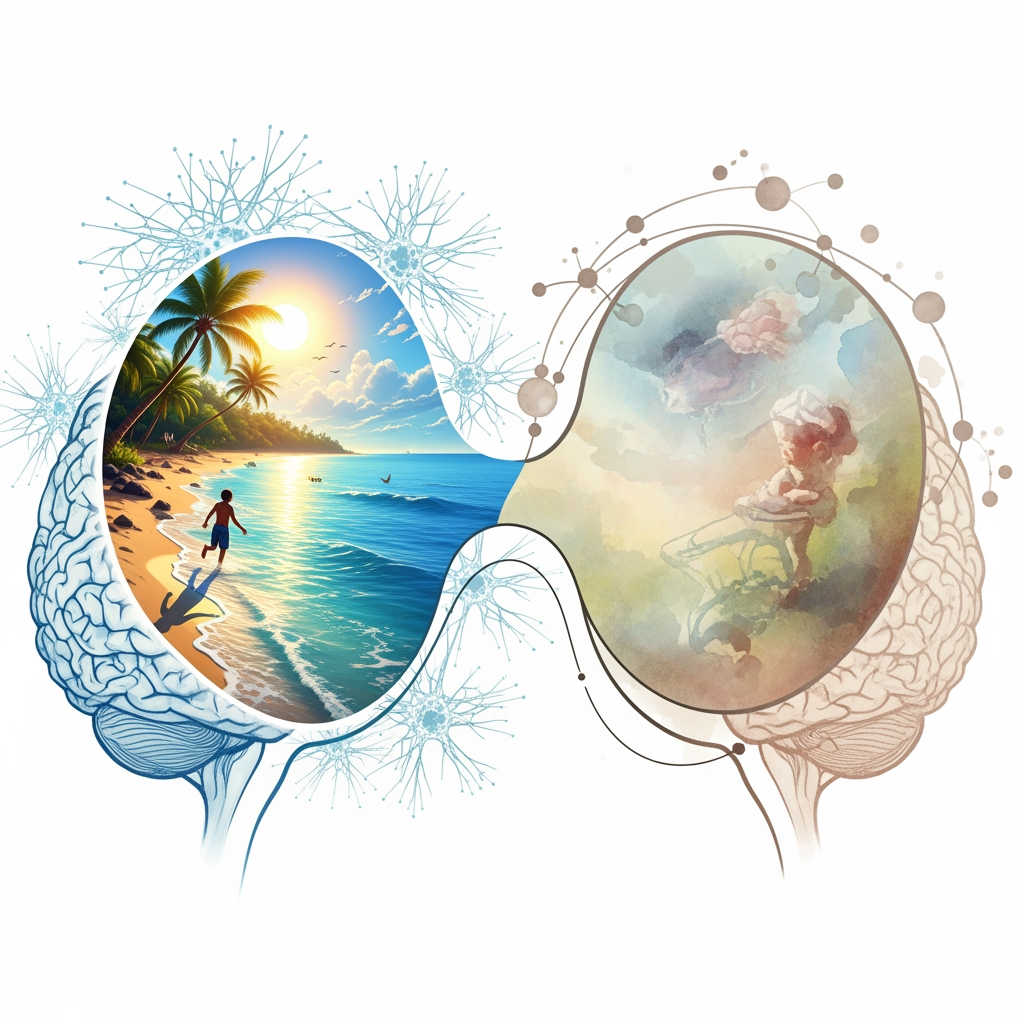
You have no memories from your first two or three years of life, and few before age seven. This universal memory gap, called infantile amnesia, puzzled Freud and continues to intrigue researchers today.
The Hippocampus Isn't Ready
The hippocampus, crucial for forming autobiographical memories, isn't fully developed in infancy. While babies can form short-term memories and learn, the neural structures for long-term episodic memory mature gradually.
Language Matters
Before learning language, experiences are encoded differently. Later retrieval attempts using language-based thinking may fail to access pre-linguistic memories. It's like trying to read a file in incompatible format.
Rapid Brain Changes
Early childhood involves explosive neural development and pruning. The brain that formed early memories is literally different from the brain that would retrieve them. Some memories may be overwritten or become inaccessible.
Sense of Self
Autobiographical memory requires a sense of self to organize experiences around. This self-concept develops gradually. Before understanding yourself as a continuous person over time, memories lack a framework for storage.
They're Not Completely Gone
Early experiences still shape you—through emotional conditioning, learned behaviors, and unconscious associations. The experiences influenced your development even if you can't consciously recall them.
False Early Memories
"Memories" from very early childhood are often reconstructions based on photos, family stories, or imagination. The brain fills in gaps with plausible details, creating convincing but false memories.
This article was generated by AI to provide informational content.