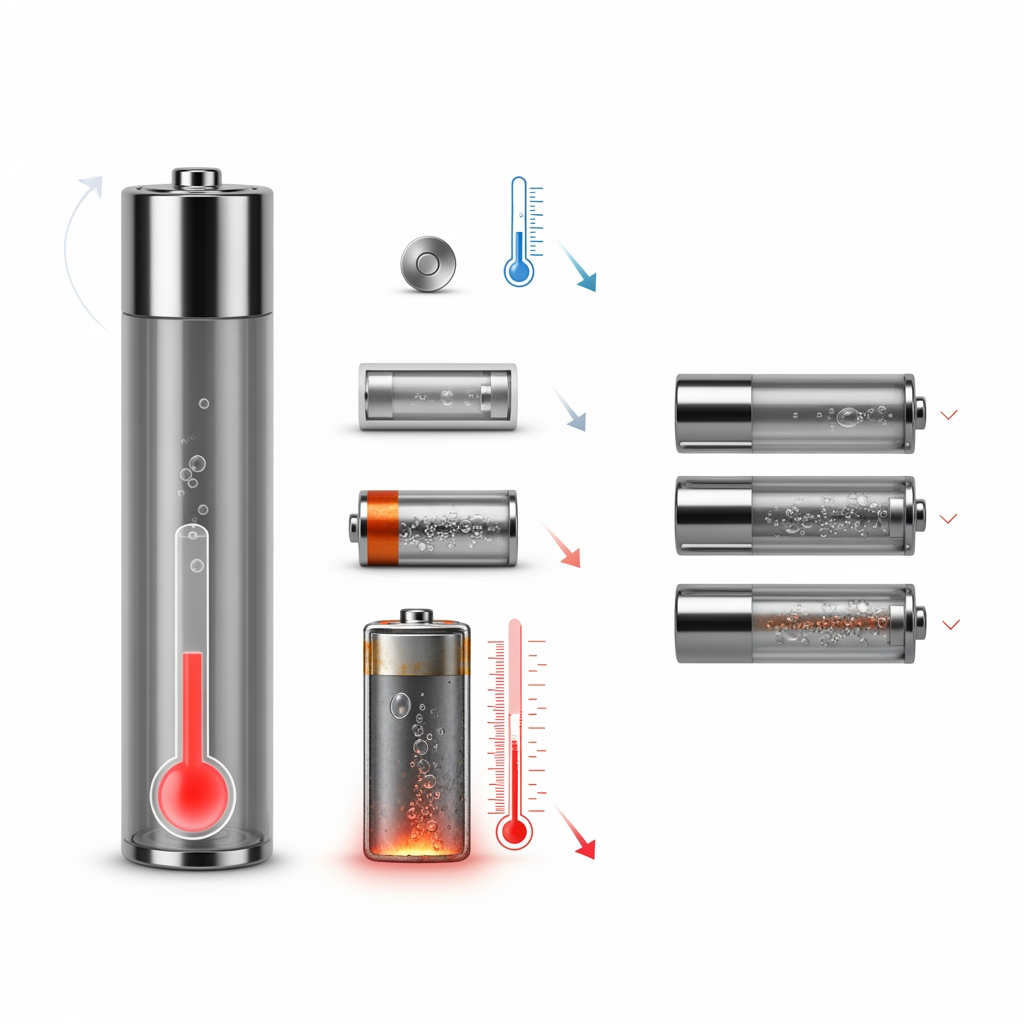
Leave batteries in a drawer for months and they'll have less charge than when you stored them. Even without powering anything, batteries slowly drain. Several factors cause this self-discharge.
Internal Chemistry Never Stops
Batteries generate electricity through chemical reactions. Even without an external circuit, slow internal reactions continue. Electrons trickle between electrodes through unintended pathways, gradually depleting stored charge.
Temperature Effects
Heat accelerates chemical reactions, including unwanted internal ones. Batteries stored in hot environments self-discharge faster than those kept cool. Refrigeration can slow but not stop the process.
Different Battery Types
Self-discharge rates vary widely. Alkaline batteries lose about 2-3% per year. NiMH rechargeable batteries can lose 1-4% per day. Lithium-ion batteries fall between. Some specialized batteries (eneloop, lithium primary) are designed for minimal self-discharge.
Age Matters
Older batteries self-discharge faster. Internal components degrade over time, creating more paths for internal reactions. This is why even unused batteries have expiration dates.
Practical Implications
For emergency supplies, choose low self-discharge types. Rotate stock, using older batteries first. Keep batteries cool and dry. Rechargeable batteries may need refreshing before use if stored for months.
Full vs. Partial Charge Storage
Lithium-ion batteries store best at about 40-50% charge. Full charge stresses the battery, accelerating degradation. Completely empty storage also causes problems. Follow manufacturer recommendations for long-term storage.
This article was generated by AI to provide informational content.