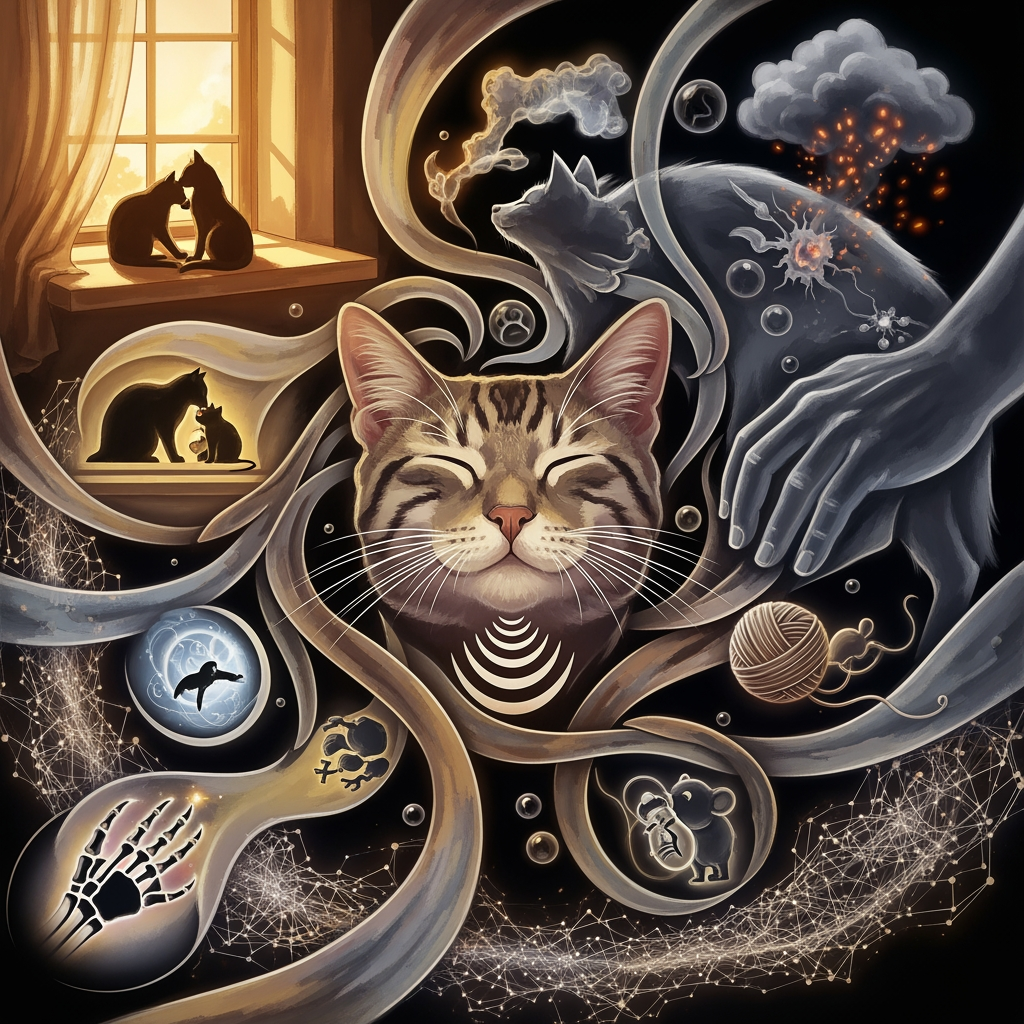
The rhythmic rumble of a purring cat seems to signal contentment. But cats also purr when stressed, injured, or even dying. This seemingly simple behavior has surprising complexity.
The Mechanism
Cats purr by rapidly contracting and relaxing the muscles in their larynx. This movement opens and closes the glottis—the part of the larynx surrounding the vocal cords—creating vibrations during both inhaling and exhaling. The result is continuous purring.
Not Just Happiness
While cats do purr when content, they also purr during stressful situations: veterinary visits, illness, injury, and even labor. This suggests purring serves purposes beyond expressing pleasure.
Self-Healing Theory
Purring vibrations fall in the 25-150 Hz range—frequencies known to promote bone density and tissue healing. Some researchers propose that cats purr to stimulate their own healing, explaining why they purr when injured or unwell.
Communication
Kittens begin purring within days of birth, possibly to communicate with their mother before their eyes open. Mother cats purr back, perhaps directing kittens to nursing. Adult cats may retain this communication behavior with humans.
The Solicitation Purr
Cats have a special purr mixed with a higher-frequency cry, used when requesting food. Research shows this "solicitation purr" triggers urgent responses in humans, exploiting our sensitivity to frequencies similar to infant cries.
This article was generated by AI to provide informational content.