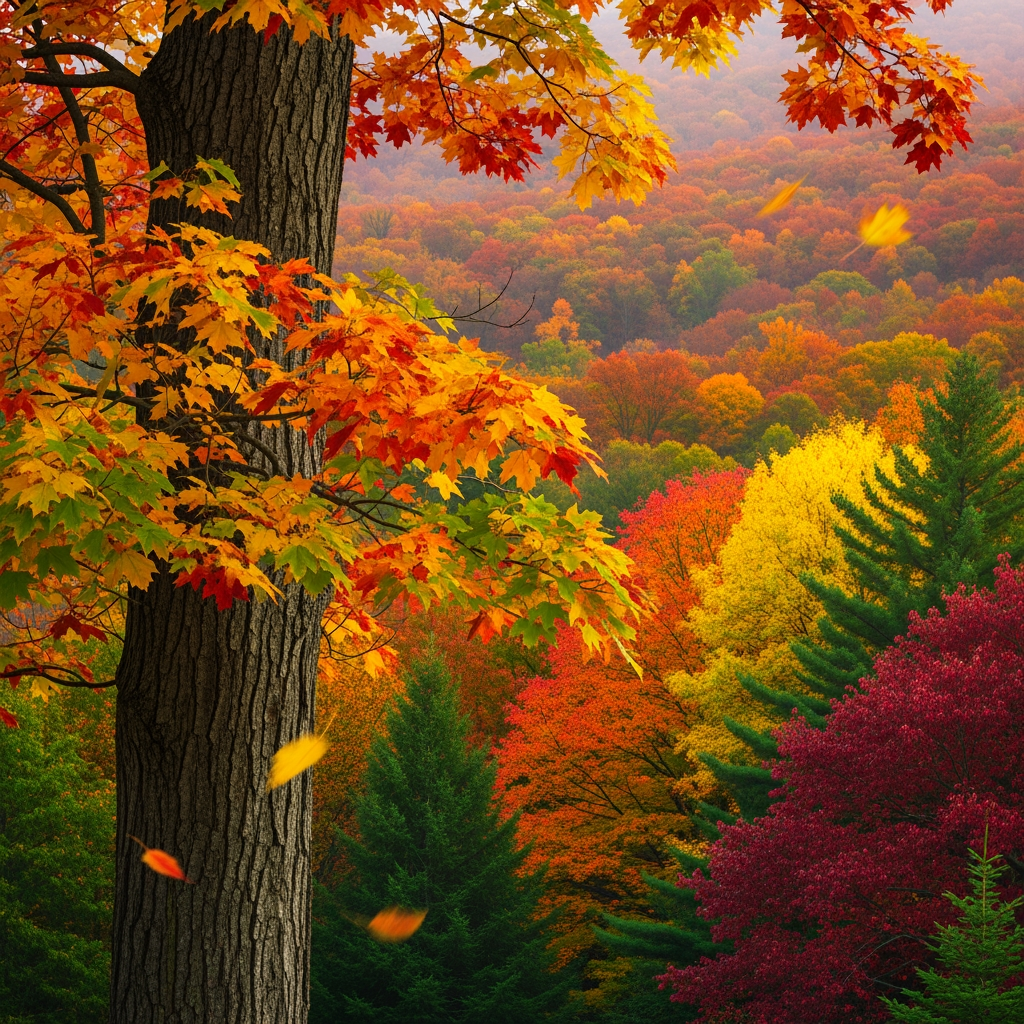
Every autumn, green forests transform into spectacular displays of red, orange, and gold. This beautiful phenomenon involves both chemistry and plant survival strategies.
The Green Disappears
Leaves are green because of chlorophyll, the pigment that captures sunlight for photosynthesis. As days shorten, trees stop producing chlorophyll. The existing chlorophyll breaks down, and the green fades, revealing other pigments that were there all along.
Hidden Colors Emerge
Yellow and orange pigments called carotenoids exist in leaves throughout summer, masked by dominant green chlorophyll. When chlorophyll breaks down, these background colors become visible. These are the same pigments that make carrots orange and corn yellow.
Red Requires Production
Unlike yellow and orange, red colors come from anthocyanins produced in fall. Trees actively create these pigments as chlorophyll breaks down. Why some trees invest energy producing red pigments remains debated among scientists.
Temperature and Light Effects
Bright fall days and cool nights produce the most vivid colors. Light triggers anthocyanin production while cold slows chlorophyll breakdown. Warm, cloudy falls result in duller displays.
Why Bother Changing?
Leaves are expensive to maintain over winter. By withdrawing nutrients before dropping leaves, trees recover valuable resources. The color change is essentially the tree dismantling its leaf factories and salvaging materials for spring.
This article was generated by AI to provide informational content.