Sleepwalkers navigate their homes, carry on conversations, and even drive cars—all while genuinely asleep. This strange behavior occurs when the brain partially awakens from deep sleep.
A State Between Sleeping and Waking
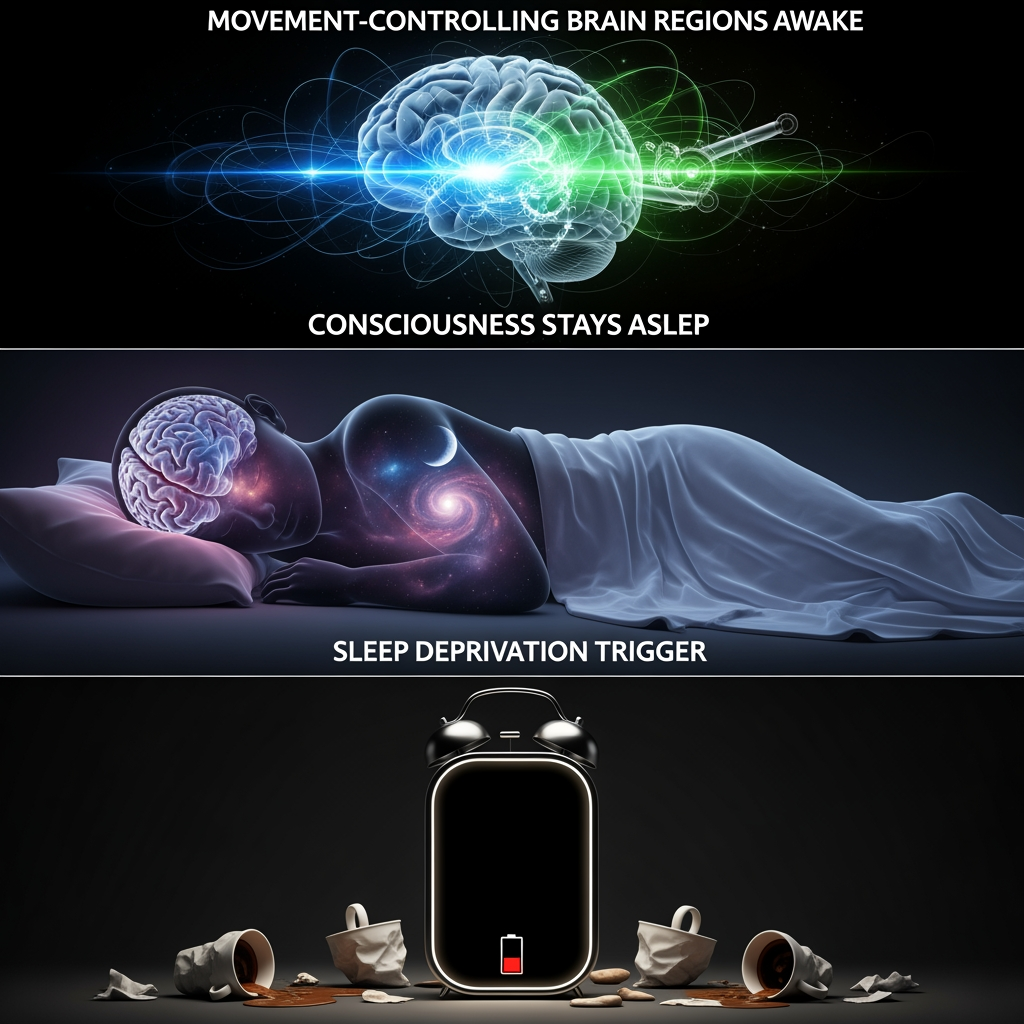
Sleepwalking happens during non-REM deep sleep, usually in the first third of the night. Parts of the brain controlling movement awaken while areas responsible for consciousness and memory remain asleep.
Who Sleepwalks
Children sleepwalk more often—up to 17% experience it. Most outgrow it by adolescence. Adults who sleepwalk often started in childhood. The tendency runs in families, suggesting genetic factors.
Triggers
Sleep deprivation dramatically increases sleepwalking risk. Fever, stress, certain medications, and sleeping in unfamiliar places also trigger episodes. Alcohol disrupts sleep architecture and can provoke sleepwalking.
What Sleepwalkers Experience
Sleepwalkers typically have no memory of their episodes. If awakened mid-episode, they're confused and disoriented. Their eyes are open but have a glassy, unfocused look. They can navigate obstacles but don't respond normally to attempts at communication.
The Danger Factor
Despite myths, waking a sleepwalker is safe—they'll just be confused. The real dangers are falling, walking into traffic, or handling dangerous objects. Severe cases may require medical intervention and environmental safeguards.
Treatment
Addressing sleep deprivation and triggers helps most cases. Medication is available for severe or dangerous sleepwalking. Securing the sleeping environment—locking doors, removing obstacles—provides practical protection.
This article was generated by AI to provide informational content.