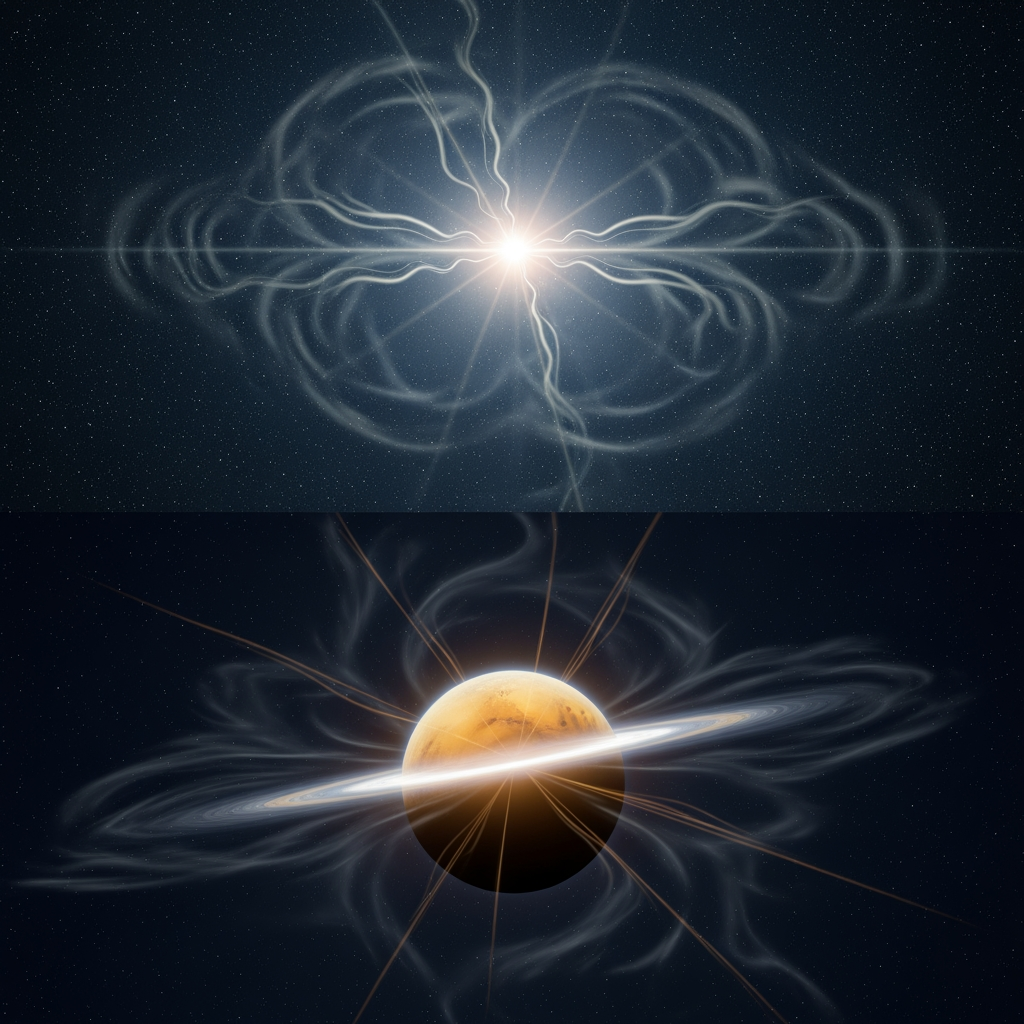
Stars shine with steady light, yet from Earth they appear to flicker and dance. Planets, however, shine steadily. The difference reveals something important about how we see the night sky.
Atmospheric Turbulence
Stars don't actually twinkle—Earth's atmosphere makes them appear to. Light from stars passes through miles of air with varying temperatures and densities. These variations bend the light slightly in changing directions, causing the twinkling effect called scintillation.
Why Stars but Not Planets
Stars are so far away that they appear as point sources of light, even through telescopes. Any atmospheric disturbance affects the entire image. Planets are closer and appear as tiny disks. Light from different parts of the disk averages out, producing steadier appearance.
Worse Near the Horizon
Stars near the horizon twinkle more than those overhead. Their light travels through more atmosphere at shallow angles. More atmosphere means more turbulence and more twinkling. This is also why stars near the horizon appear to change colors.
Better in Space
Space telescopes like Hubble don't contend with atmospheric distortion. Their images are crisp because there's no air to bend starlight. This is a major reason for putting telescopes in orbit.
Astronomers' Nemesis
Twinkling frustrates astronomers trying to observe distant objects. Modern observatories use adaptive optics—deformable mirrors that change shape hundreds of times per second to counteract atmospheric distortion in real-time.
This article was generated by AI to provide informational content.