Inhale helium from a balloon and your voice becomes squeaky and cartoonish. The effect is immediate and dramatic. What's actually happening in your throat?
Not What You Think
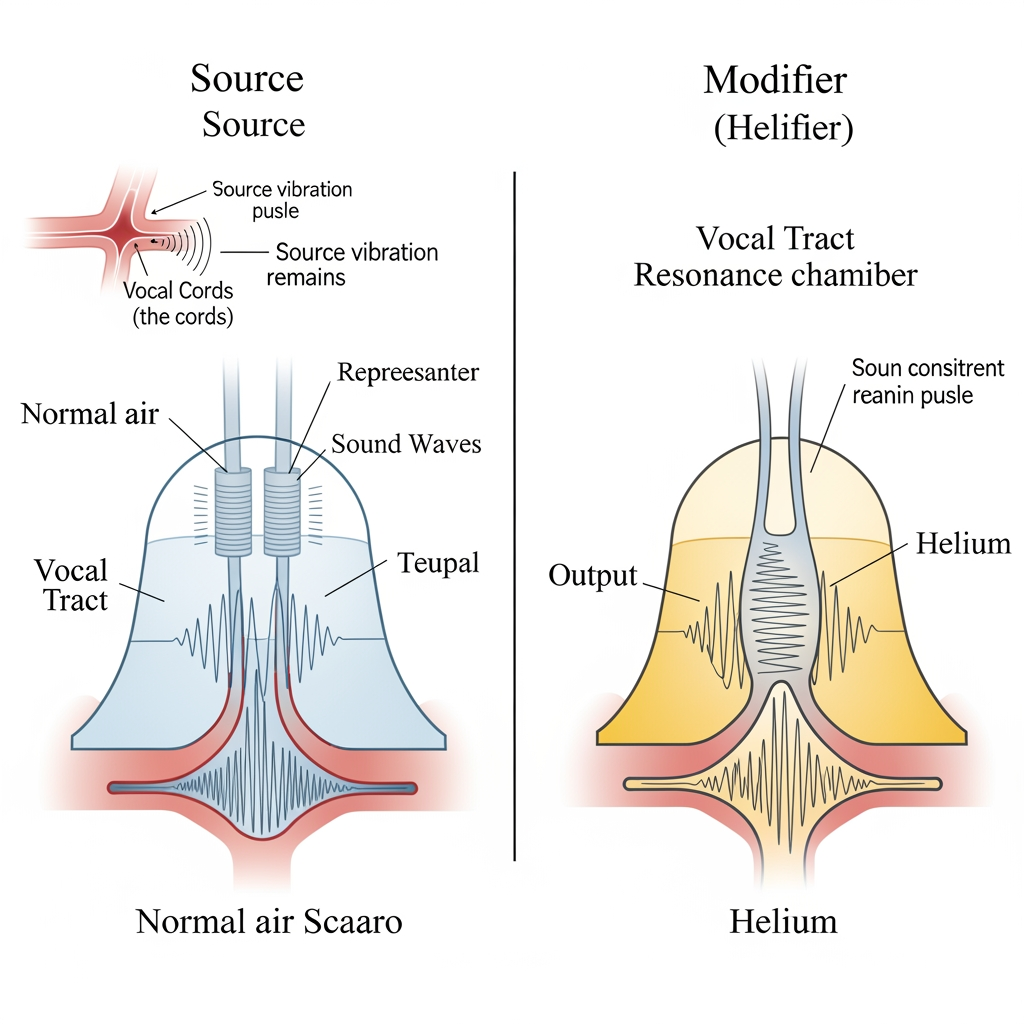
A common misconception holds that helium makes your vocal cords vibrate faster. This isn't true—your vocal cord vibration frequency doesn't change. The alteration happens to the sound after your vocal cords produce it.
Sound and Medium
Sound travels through air as pressure waves. The speed depends on the medium's properties. Sound travels about three times faster in helium than in normal air because helium is much less dense than nitrogen and oxygen.
Resonance Changes
Your vocal tract—throat, mouth, and nasal passages—acts as a resonating chamber that amplifies certain frequencies. When filled with helium instead of air, resonant frequencies shift higher. Higher harmonics become emphasized while lower ones diminish.
The Resulting Sound
Your fundamental pitch stays the same, but the overtones that give your voice its characteristic quality shift upward. This makes your voice sound thinner, squeakier, and higher without actually changing the basic frequency produced by your vocal cords.
The Opposite Effect
Sulfur hexafluoride, a gas much denser than air, creates the opposite effect—voices become deep and gravelly. The same principle applies: resonant frequencies shift, this time downward.
Safety Note
Helium displaces oxygen. Inhaling too much causes oxygen deprivation. Brief balloon use is generally safe, but directly inhaling from pressurized tanks is dangerous and has caused deaths.
This article was generated by AI to provide informational content.