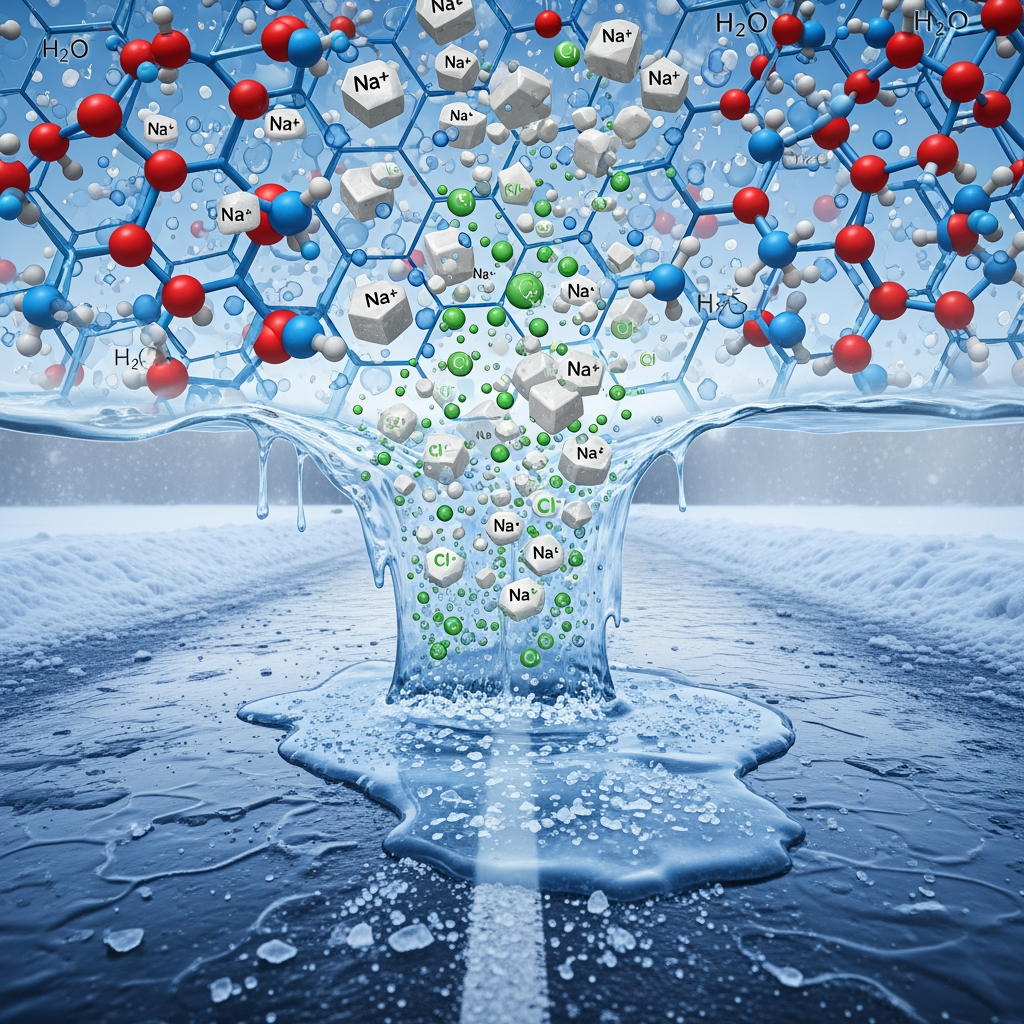
Winter sidewalks get salted to clear ice. But salt doesn't actually produce heat—so how does it make ice melt? The answer involves some counterintuitive chemistry.
Freezing Point Depression
Pure water freezes at 32°F (0°C). Adding salt lowers this freezing point. A saturated salt solution can remain liquid down to about -6°F (-21°C). This phenomenon is called freezing point depression.
How It Works
Ice and liquid water exist in equilibrium at the freezing point. Water molecules constantly move between solid and liquid states. Salt dissolved in the liquid interferes with water molecules rejoining the ice structure. More molecules leave the ice than return, causing it to melt.
Why Salt Specifically
Any dissolved substance lowers the freezing point. Salt is used because it's cheap, abundant, and effective. Calcium chloride works at even lower temperatures but costs more. Sugar would work too but would attract animals and create a sticky mess.
The Temperature Limit
Salt stops working below certain temperatures. Once it's cold enough that even the salt solution freezes, adding more salt won't help. This is why extreme cold requires sand for traction instead of salt for melting.
Environmental Concerns
Road salt accumulates in soil and water. It damages plants, contaminates drinking water, and corrodes vehicles and infrastructure. Many areas are seeking alternatives like beet juice, cheese brine, or heated pavement systems.
This article was generated by AI to provide informational content.