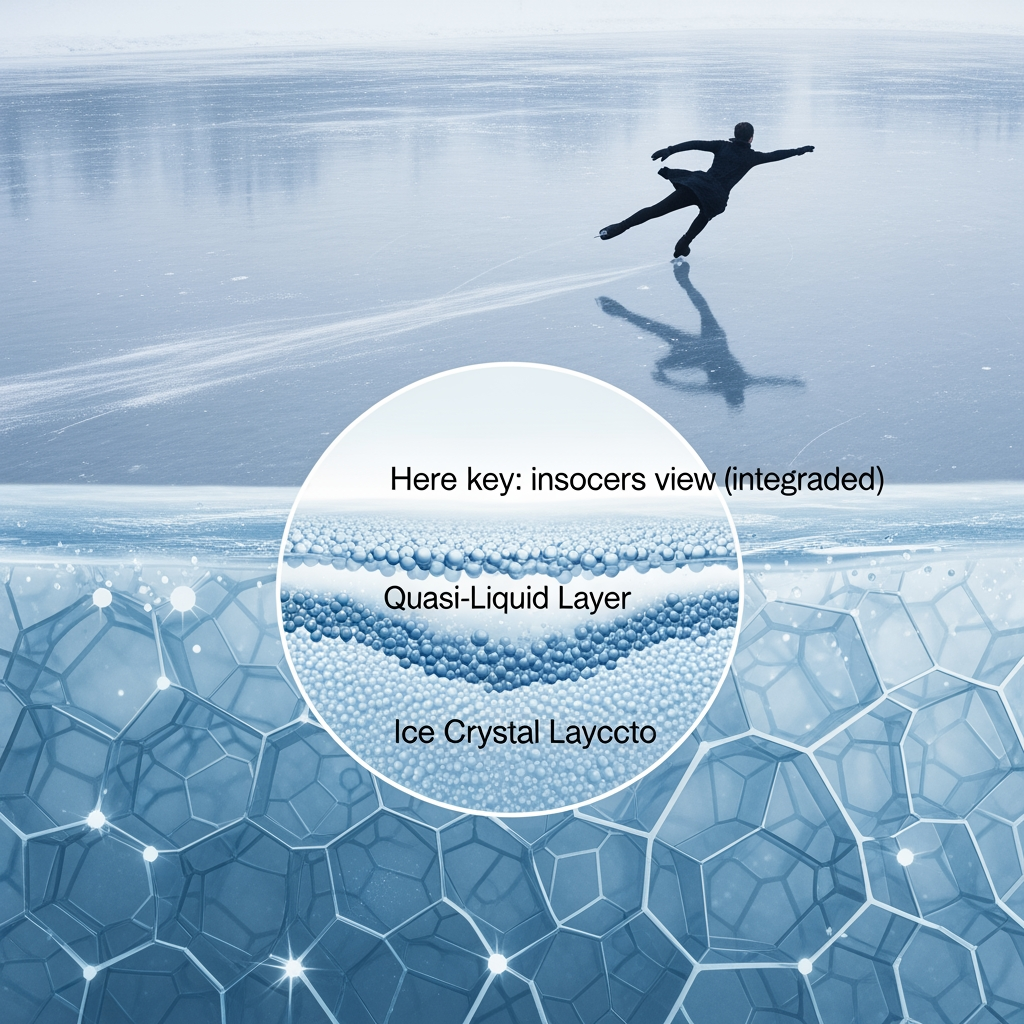
Ice skating, slipping on frozen sidewalks, and curling all depend on ice's unusual slipperiness. The explanation turns out to be more complex than scientists once thought.
The Old Theory
For over a century, scientists believed pressure from skates or shoes melted a thin layer of ice, creating lubrication. This pressure-melting theory seemed elegant but has problems—ice is slippery even at temperatures where the pressure required would be impossibly high.
Surface Premelting
Current understanding focuses on ice's surface structure. Even well below freezing, the outermost molecules of ice aren't fully locked into the crystal structure. They form a quasi-liquid layer that provides lubrication without actual melting.
Temperature Still Matters
Ice becomes less slippery at very cold temperatures as the liquid-like layer thins. Extremely cold ice (-30°C and below) can actually be quite grippy. This is why Antarctic explorers don't slip constantly.
Friction's Role
Friction between your shoe and ice does generate heat, contributing to lubrication. The quasi-liquid layer also facilitates sliding by acting like microscopic ball bearings. Both mechanisms likely contribute.
Still Debated
Scientists continue researching ice's slipperiness. Recent studies using advanced microscopy reveal the liquid-like layer is only a few molecules thick. The complete explanation may involve multiple factors working together.
This article was generated by AI to provide informational content.