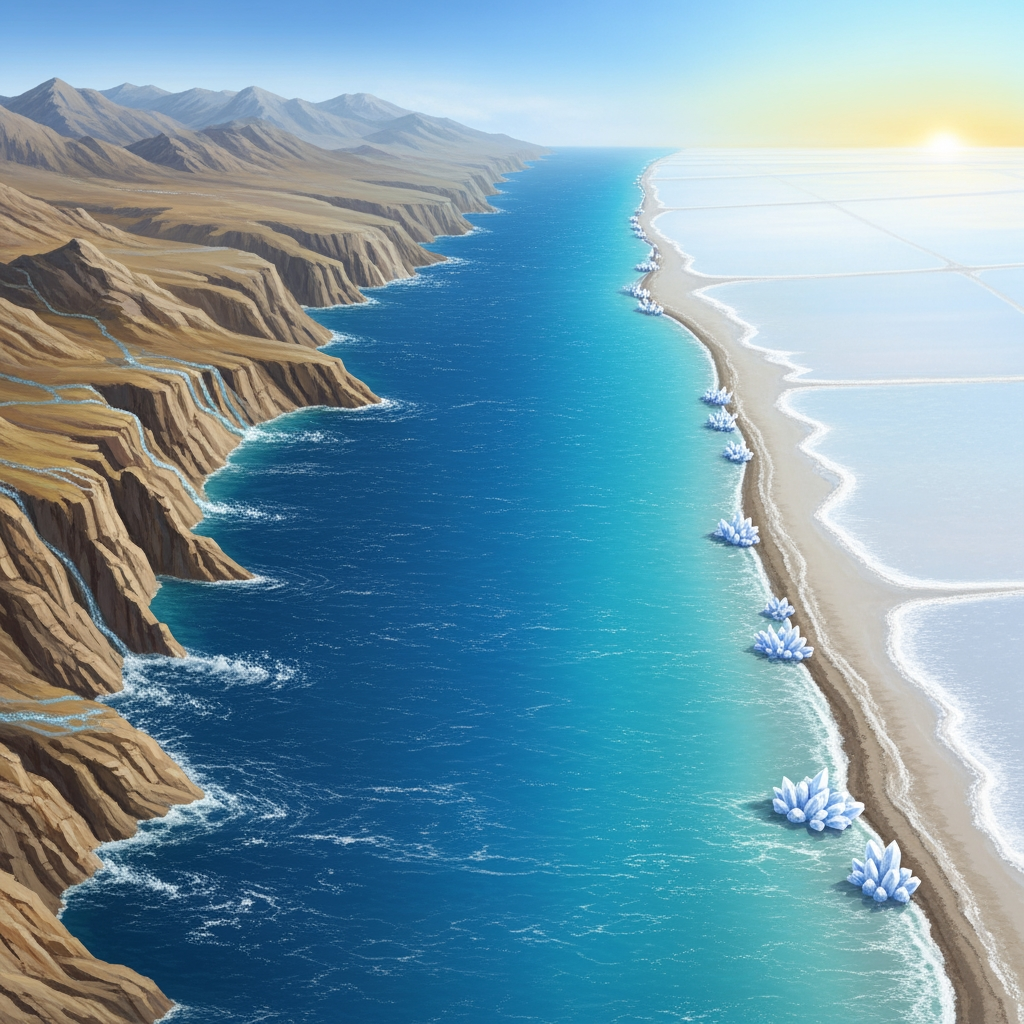
Rivers flow into the ocean, but rivers aren't salty. Rain falling from the sky isn't salty either. So where does all that ocean salt come from? The answer spans billions of years.
Rivers Carry Minerals
Rain dissolves small amounts of carbon dioxide from the atmosphere, becoming slightly acidic. This acidic water erodes rocks, dissolving minerals including sodium and chloride. Rivers carry these dissolved minerals to the ocean—about four billion tons annually.
The Salt Accumulates
When ocean water evaporates, it leaves dissolved minerals behind. Fresh water rises, forms clouds, falls as rain, dissolves more minerals, and the cycle continues. Over billions of years, this process concentrated salt in the oceans.
Hydrothermal Vents
Volcanic vents on the ocean floor also contribute. Seawater seeping through cracks in the crust gets superheated, dissolving minerals from rock. This mineral-rich water erupts back into the ocean at hydrothermal vents.
Why Rivers Taste Fresh
Rivers contain dissolved minerals too—just in much lower concentrations. The amount is too small to taste. Rivers also flow, constantly replacing their water, while oceans accumulate minerals over geological timescales.
Has the Ocean Always Been This Salty?
Ocean salinity has remained relatively stable for hundreds of millions of years. Salt is removed through geological processes—mineral deposits, sea spray, and reactions with ocean floor rocks—at roughly the same rate it's added.
This article was generated by AI to provide informational content.